
7 Things Nobody Really Tells You About Living in San Tan Valley, AZ
If we had to summarize what surprised us most about living in San Tan Valley, AZ, it is this: it looks and feels like a typical Phoenix suburb, but it does not always run like one. A lot of the “rules” of daily life here are shaped by how the area grew, who provides services, and how the neighborhoods developed over time.
So if you are researching the area from out of state, or you have only seen it through the lens of listings and glossy brochures, this guide is for you. Below are seven real-world details that tend to get glossed over until you are already in the middle of it.
Table of Contents
- 1. San Tan Valley Was Unincorporated Its Whole Life
- 2. "Affordable" Doesn't Always Mean What You Think
- 3. Weather Is Not Just Hot, It Is Unpredictable
- 4. San Tan Valley Isn't Just One Place
- 5. Your Mailing Address Might Not Match Your Reality
- 6. You're Going to See More Wildlife Than You Expect
- 7. It Gets Really Dark Out Here
- So, What Is the Honest Take on Living in San Tan Valley, AZ
- FAQs About Living in San Tan Valley, AZ
- Key Takeaways for Living in San Tan Valley, AZ
Quick note: We are not talking about scare stories here. We are talking about “know before you go” details that can save you from confusion, budget surprises, and culture shock when living in San Tan Valley, AZ.
1. San Tan Valley Was Unincorporated Its Whole Life
One of the most unusual things about living in San Tan Valley, AZ is that it used to be “basically a city” without being a city. For years, San Tan Valley was an unincorporated area of Pinal County, in the far southeast Phoenix valley.
As the population grew, the area began to look and function like a suburb. By today’s numbers, it is around 110,000 residents. That is the scale where people expect the normal municipal setup. But it did not always have it.
Here is the key timeline: residents voted to incorporate, and effective July 1, 2026, the area will officially become the town of San Tan Valley.
That sounds like “everything changes overnight,” but it does not. For now, you are in that in-between phase where it feels like a city in day-to-day appearance, while operations can still be structured differently than you might expect.
Why this matters: If you are comparing it to other places in the Phoenix metro area, do not assume the same local government model, service structure, or funding approach. The area has grown quickly, but the administrative framework is catching up.
2. "Affordable" Doesn't Always Mean What You Think
Plenty of people are drawn to living in San Tan Valley, AZ because home prices are often more affordable than other parts of the Phoenix metro area. On paper, that is a big win.
But when newcomers focus only on the mortgage payment, they can miss the layered nature of monthly expenses. In this area, some services you might assume are part of a city bill can instead be handled through HOAs or private providers.
Here are a few examples of how that plays out:
- Trash service: In some cases it is handled through an HOA. More commonly, it is provided through a private provider such as Republic Services or Waste Connections, rather than a city sanitation department.
- Water and sewer: These are provided by Epcor, which is a nationwide private utility company rather than a city utility.
Once you know that these costs can be billed separately, budgeting becomes much easier. The bigger lesson is not that “San Tan Valley is expensive.” It is that the monthly picture can look different than what you are used to in a fully municipal setup.
What we like to tell relocation buyers: Build your budget like the services are layered, not bundled.
Fire and EMS can work differently than you expect
This is where a lot of people do not just say “interesting.” They react with genuine surprise.
In San Tan Valley, fire protection and emergency medical services are provided by Rural Metro Fire Department. And Rural Metro operates on a subscription-based model rather than a typical municipal funding structure.
So yes, the idea that you are paying for fire coverage through an annual subscription can feel unusual if you are coming from a large city where everything is handled directly by the municipality.
How the subscription model works
- Homeowners pay an annual subscription fee that covers fire protection and emergency response services.
- The fee is based on home size. On average, it runs around about 800 per year.
- Rural Metro still responds to emergencies even if you are not subscribed.
- If you are not subscribed, you can receive a bill later for the services provided, which can be expensive.
So while it is not a “bad thing,” it is a different thing. Most residents enroll, mostly because it avoids the expensive follow-up billing scenario.
Bottom line: If you are going to living in San Tan Valley, AZ, make sure your budget and your expectations include subscription-based services, at least for now.
3. Weather Is Not Just Hot, It Is Unpredictable
Let us be clear: living in San Tan Valley, AZ can be hot. That is not a mystery.
What surprises people is how quickly conditions can change. Beyond the heat, the area gets big windy dust storms and monsoon storms that can roll in fast and drop visibility dramatically, sometimes to near zero.
The transcript described a vivid scenario: bright sunny day, things are going well, then suddenly the sky turns brown and visibility gets bad fast. That is the kind of weather shift people do not experience in the same way elsewhere.
One term you will hear around here is a haboob, which can be 1,500 to 3,000 feet tall and over 100 miles wide.
What to do during a dust storm
We are not trying to turn this into a safety lecture, but there are practical steps that make a huge difference.
- If you are driving: pull over into a parking lot and wait it out.
- If you are at home: close doors and windows.
- After it passes: you can clean up by blowing off patios or outdoor surfaces. Some storms are followed by a rain shower that helps clean things up.
The real question is not only can you handle the heat. It is can you handle the desert doing its thing.
4. San Tan Valley Isn't Just One Place
Another thing that tends to catch people off guard: San Tan Valley does not have one single downtown civic core that defines the whole place. It was developed in pieces and parcels over time, and it is only recently moving toward incorporation.
So the “identity” often feels neighborhood-based rather than city-centered.
When people say they live in San Tan Valley, what they often mean is: they live in a specific neighborhood, like Johnson Ranch, Copper Basin, San Tan Heights, or the newer areas closer to Queen Creek.
Those neighborhoods can feel noticeably different, including how connected they are to conveniences and how “out there” they may feel depending on location.
The practical implication: Do not assume that “San Tan Valley” is one uniform experience. Ask which part of San Tan Valley you are actually looking at. Two addresses in the same general area can feel very different day to day.
5. Your Mailing Address Might Not Match Your Reality
This is one of those details that feels minor until it starts causing real confusion.
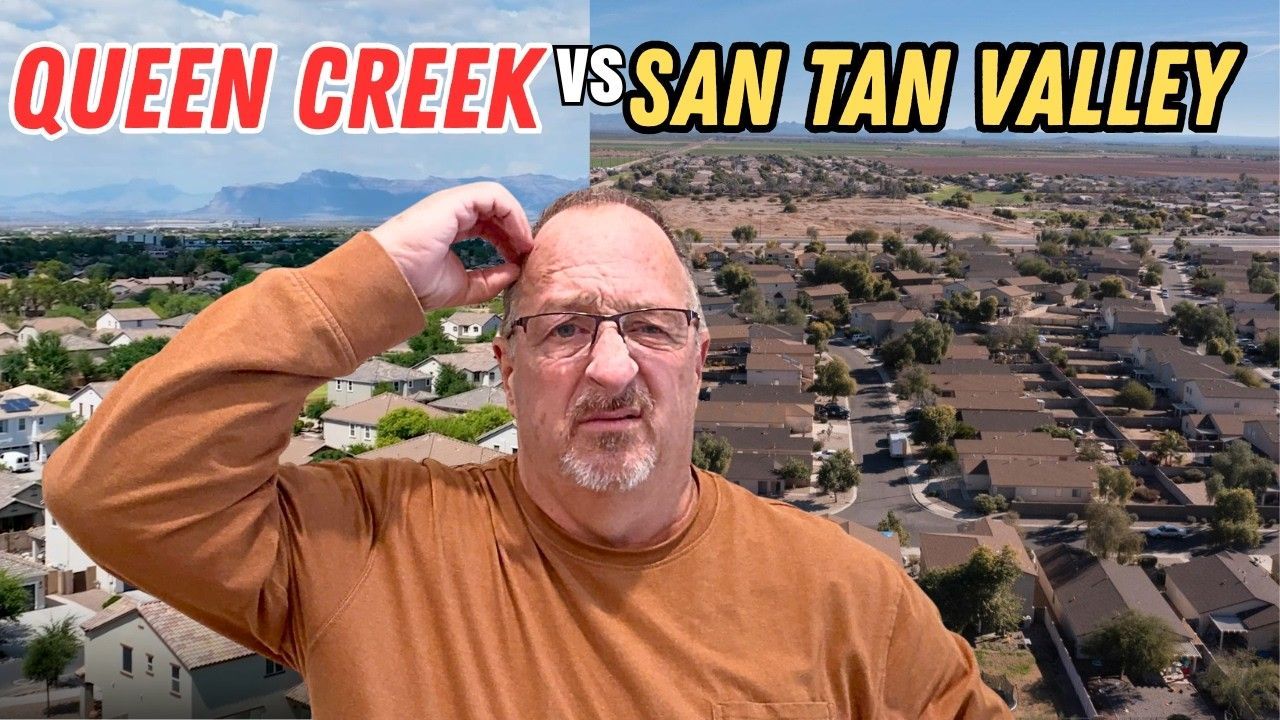
Your street location may be in San Tan Valley, Pinal County, but your mailing address could say Queen Creek. That happens because zip codes and postal routes do not always follow city boundaries.
And in a place like this, zip code labels can create misunderstandings about where you “actually” are.
Why it matters: It is not just about what your mail says. The transcript highlighted that school districts, taxes, and even services can differ depending on location, not just the address label you see on paperwork.
You could order something and get packages addressed to Queen Creek, while your day-to-day life tells a different story.
What we recommend: When evaluating a home in living in San Tan Valley, AZ, verify the details that affect daily life, not just the city name on the listing or mail destination.
6. You're Going to See More Wildlife Than You Expect
Let us close with something wholesome and real.
In many suburban places, you rarely think about wildlife beyond a few pigeons and the occasional squirrel. But living in San Tan Valley, AZ means you are closer to open desert. Even when neighborhoods look brand new and traditional, wildlife can show up.
You might be out for a walk, backing out early in the morning, and see a coyote casually walking down the street. Or you might hear that javelina are wandering through neighborhoods. Rabbits are common enough that someone will almost certainly mention them at some point.
Construction and growth displace wildlife from natural environments, so sightings can become more frequent as communities expand.
Scorpions: People worry about scorpions, and the truth is they are part of the environment, but they are not as constant or extreme as you might fear.
The transcript shared that the speaker lived there their whole life and did not see a scorpion until age 14. They also mentioned that in their own homes there were no scorpions, while a mother-in-law might find one or two every couple months. That is a reminder that your experience can vary by area.
7. It Gets Really Dark Out Here
Here is the detail that feels like an unexpected bonus.
Many parts of San Tan Valley follow a dark sky approach. Pinal County actively promotes dark sky awareness, and being on the edge of the Phoenix metro area means you may get better night views than more built-out parts of the valley.
There are fewer streetlights in many areas, and lighting is designed to reduce light pollution. The result is that you can see real stars, not just a few dots.
Depending on who you are, that darkness can feel:
- Peaceful and quiet, like it does not feel like the city
- Uncomfortable at first if you are used to heavy street lighting
But after adjustment, many people end up loving it because you look up at night and think, this is actually pretty cool.
So, What Is the Honest Take on Living in San Tan Valley, AZ
Here is the most honest framing we can give you: San Tan Valley is not perfect, but for the right person, it works really well.
It is growing, it is still a little different than some people expect, and there are a few “quirks” you only learn after you understand how the area functions. But if you know these points going in, you are far less likely to get hit with big surprises later.
If you are relocating from out of state, the smartest next step is to do your homework and ask the specific questions that impact daily life, including service structure, budgeting, neighborhood fit, and location details beyond the address label.
Want the real-world answer for your specific move? Reach out to me, John Ferrin with The Ferrin Group for a quick, no-pressure consultation about living in San Tan Valley, AZ—and what to expect before you buy. Call or text today at 480-458-7399.
Prefer email? john@theferringroup.com
FAQs About Living in San Tan Valley, AZ
Is San Tan Valley, AZ really different from other parts of the Phoenix metro area
Yes. It can feel like a typical suburb visually, but it historically operated as an unincorporated area. That means services can be provided by private companies and in some cases subscription-based models, which can affect budgeting and expectations.
What should we budget for beyond the mortgage payment
Plan for layered costs tied to utilities and services. Trash may be through an HOA or a private provider. Water and sewer are provided by a private utility provider. Fire protection and EMS can include an annual subscription fee.
Do we need to subscribe for fire and EMS services
In the San Tan Valley area, fire protection and EMS services are provided by Rural Metro on a subscription-based model. The emergency response still occurs even if you are not subscribed, but you can receive a bill afterward if you are not enrolled.
How bad are the dust storms and monsoon storms
They can be intense and unpredictable, with rapid visibility drops. Practical steps include pulling over and waiting when driving, and closing doors and windows when at home. Some storms are followed by rain that helps clean things up.
Does everyone in San Tan Valley live in the same neighborhood type
No. People often identify by specific neighborhoods within San Tan Valley, and those can feel noticeably different in terms of convenience and how connected they are.
Why might a San Tan Valley address say Queen Creek
Zip codes and postal routes do not always match local boundaries. So your mailing address may point to Queen Creek even if you are physically located in San Tan Valley, which can create confusion about schools, taxes, and certain services.
Should we worry about wildlife and scorpions
Wildlife sightings are common enough to expect some surprises, especially because neighborhoods expand into desert-adjacent areas. Scorpions are part of the environment, but how often you see them can vary by location. Many people go long periods without seeing any.
Key Takeaways for Living in San Tan Valley, AZ
- San Tan Valley was unincorporated for a long time and is moving into incorporation, which affects how the area functions now.
- Budget for service layers, not just the mortgage payment.
- Fire and EMS can be subscription-based, with an annual fee and bill risk if not subscribed.
- Weather changes fast, including dust storms and monsoon storms.
- Neighborhood identity is real, and “San Tan Valley” is not one uniform experience.
- Mailing addresses can be misleading due to zip code boundaries.
- Wildlife and dark skies are part of the deal.
If we are being completely honest, living in San Tan Valley, AZ is one of those places where you get out what you put in. The more we understand the structure, the weather patterns, the neighborhood differences, and the location quirks, the more “home” it feels once we are settled.
The Ferrin Group
This is paragraph text. Click it or hit the Manage Text button to change the font, color, size, format, and more. To set up site-wide paragraph and title styles, go to Site Theme.

Recent Posts